Understanding skin goals
An almanac of what changes
Anti-ageing
Slower,
not stopped
Most of what people call ageing skin is sun damage. That is the good news, because it is the part you can still act on — and the reason a sunscreen habit outperforms every serum in this catalogue.
What changes, and roughly when
20s
Collagen production begins its slow decline
Nothing visible yet for most people. This is when protection is worth the most and feels least urgent.
30s
Turnover slows, first lines settle in
Expression lines stop springing back. Skin looks duller because cells linger longer at the surface.
40s
Oil drops, elasticity goes with it
Skin gets drier and less springy. Sun damage from twenty years ago starts surfacing as pigment and texture.
50s+
Structure, not just surface
Fat pads and bone reshape, so the face changes outline as well as texture. Creams can change the surface and some of what sits under it, but not the outline, which is worth knowing before spending.
Ages are averages and genetics move them by a decade in either direction. Nothing on this timeline is a deadline.
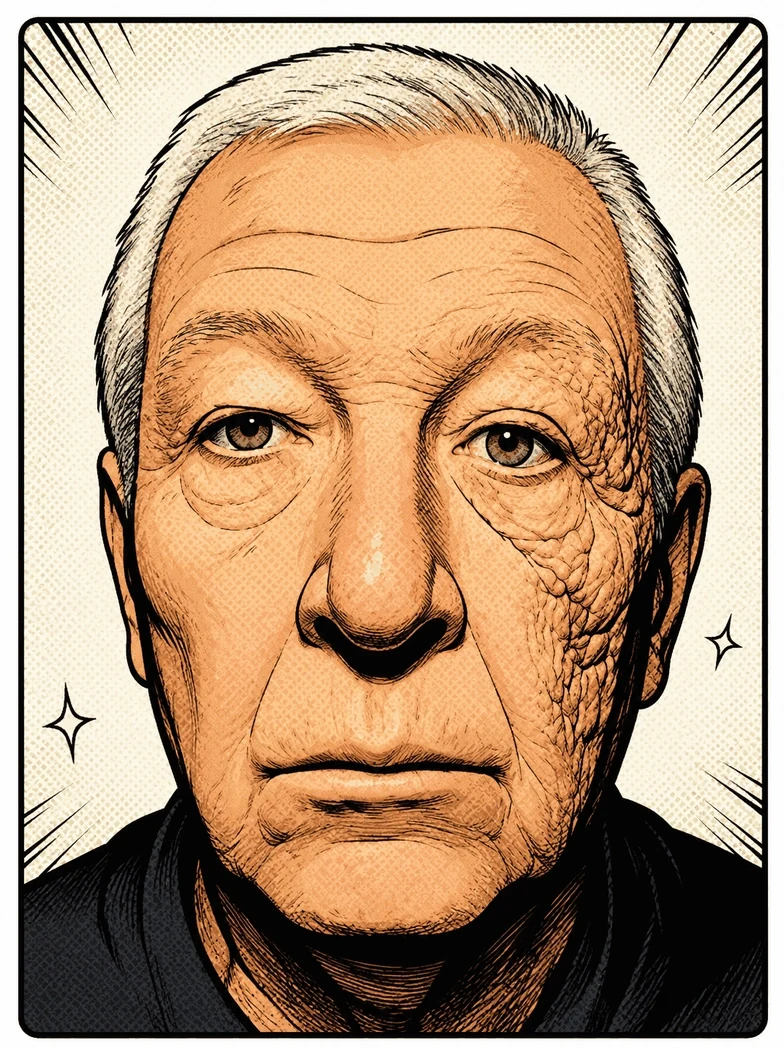
Illustration after a case published in the New England Journal of Medicine, 2012.
The one that outranks everything
Sunscreen is the anti-ageing product
Compare the skin on your forearm with the skin on your hip. Same age, same genes, different exposure. Almost every difference you can see there is accumulated light, not time.
Which is why the order of operations matters more than the shopping. Daily broad-spectrum protection first, then one retinoid used consistently, then everything else as a refinement.
Potentially helpful products
What is actually shown to work
Retinol family
Well evidenced, and available without a prescription. Stimulates collagen and speeds turnover, softening fine lines over sustained use. Two or three nights a week to begin, then build. Expect an adjustment period. Not in pregnancy.
Topical vitamin C
Supports collagen synthesis and neutralises free-radical damage from sun. Mornings, under sunscreen. Can be unstable or irritating in a poorly made formula, so patch test.
Peptides
Marketed to signal collagen production and improve firmness. Low risk, uncertain reward.
PDRN
A DNA-fragment ingredient from injectable skin boosters. One randomised trial in 2026 found a topical eye cream version outperformed retinol on lines around the eyes over 28 days — genuinely interesting, one trial, industry-adjacent, eye area only, not yet replicated. Treat whole-face claims sceptically.
Prescription
The retinoic acid family is potent and extensively studied.
Speak to a doctor to find out more about prescription-strength retinoid creams.
Not for use in pregnancy or while trying to conceive.
Where the money leaks
Collagen you drink or eat
It is digested into amino acids like any other protein. The evidence for topical collagen is no better: the molecule is far too large to cross the skin.
Stacking six actives at once
Irritation reads as ageing: red, rough, sensitive skin looks older, not younger. Fewer products, used longer.
Judging at six weeks
Collagen remodelling shows up over months. Most people quit a working routine just before the point it would have shown.
Begin
The right product, for you
The routine generator sets the sunscreen, works out whether to start you on retinol and at what pace, and keeps the rest out of your way.